A network alert can arrive in seconds. The work it triggers can take hours. Someone still must confirm what failed, open a service ticket, contact the carrier, follow up for updates and document the outcome, all while helping the business stay operational.
For IT leaders, that gap between detection and resolution creates an operational burden. Monitoring provides visibility, but responding often depends on people moving information between systems and managing each step manually. As organizations add locations, devices and cloud services, the coordination becomes more demanding.
An alert is only the beginning
When a location loses connectivity, the team must determine what is affected, whether related devices share a common failure and who owns the response. A carrier outage can trigger alerts across multiple devices, generating several tickets for one underlying problem.
Without coordination, engineers may investigate the same incident separately or spend time reconciling duplicate records. The volume of activity increases without necessarily moving the business closer to restored service.
Disconnected systems create more work
Most organizations already have tools for monitoring, service management, device administration and documentation. Each serves a purpose. The challenge is keeping the information consistent across each silo.
An engineer may copy site details into a service ticket, retrieve a circuit number from another system, check a vendor console and update colleagues by email. Every transfer takes time and introduces another opportunity for an incomplete record or missed handoff.
During an outage, those administrative tasks compete with troubleshooting and customer communication. They also make it harder for everyone involved to see the same status and understand what should happen next.
Carrier coordination consumes valuable time
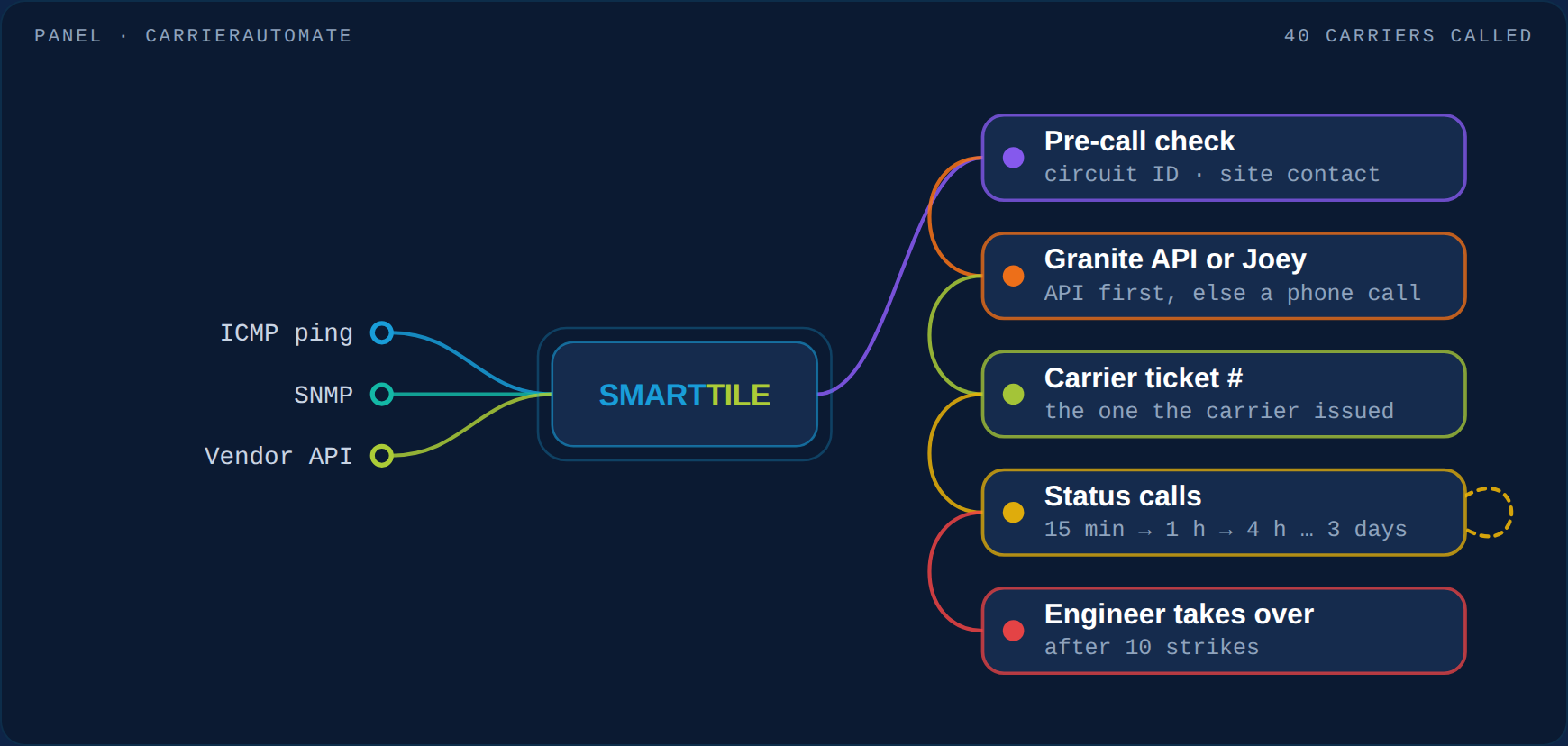
Carrier engagement adds another layer of work. Someone must reach the repair team, navigate phone menus, provide account and circuit details, obtain a ticket number and request updates.
The first call rarely represents the whole process. Follow-up and escalation may continue while engineers work with the affected location. Staff must then bring carrier updates back into the organization’s own service desk, maintaining two separate records of the incident.
That coordination is necessary, but it consumes time that skilled IT professionals could devote to technical investigation or longer-term improvements.
Recovery needs verification and a complete record
A carrier update alone does not confirm that every affected device is working again. Teams need to verify restoration through their own systems and document the outcome before closing the incident.
When notes are scattered across calls, emails and portals, reconstructing what happened becomes difficult. A consistent record supports incident reviews, service accountability and audit preparation. Building that record manually adds work throughout the response.
Connecting the work with SmartTile 2.0
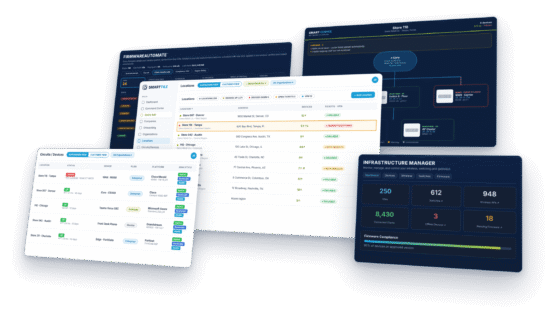
SmartChoice developed SmartTile 2.0 to automate and unify these operational steps across the systems businesses already use. The platform connects network and cloud visibility with service ticketing, carrier coordination and documentation.
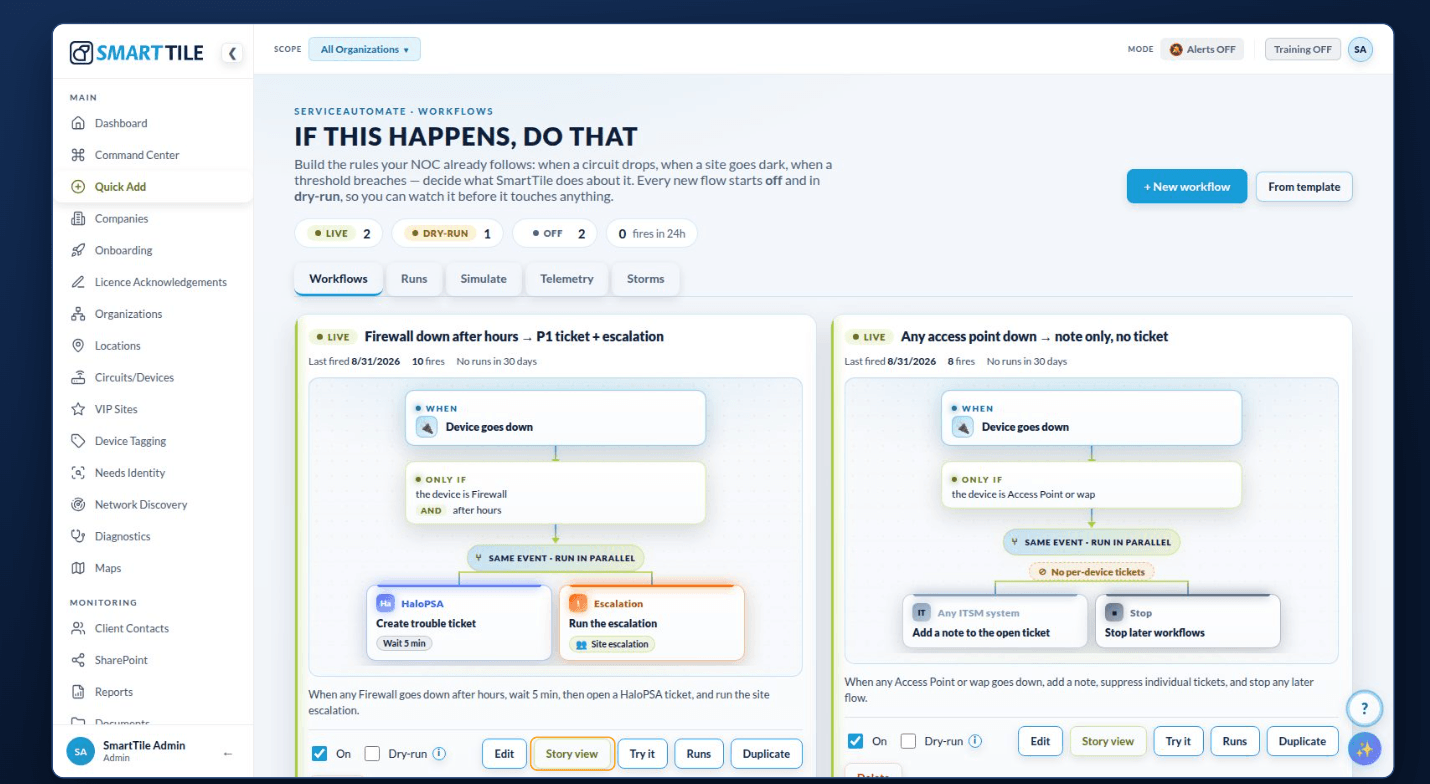
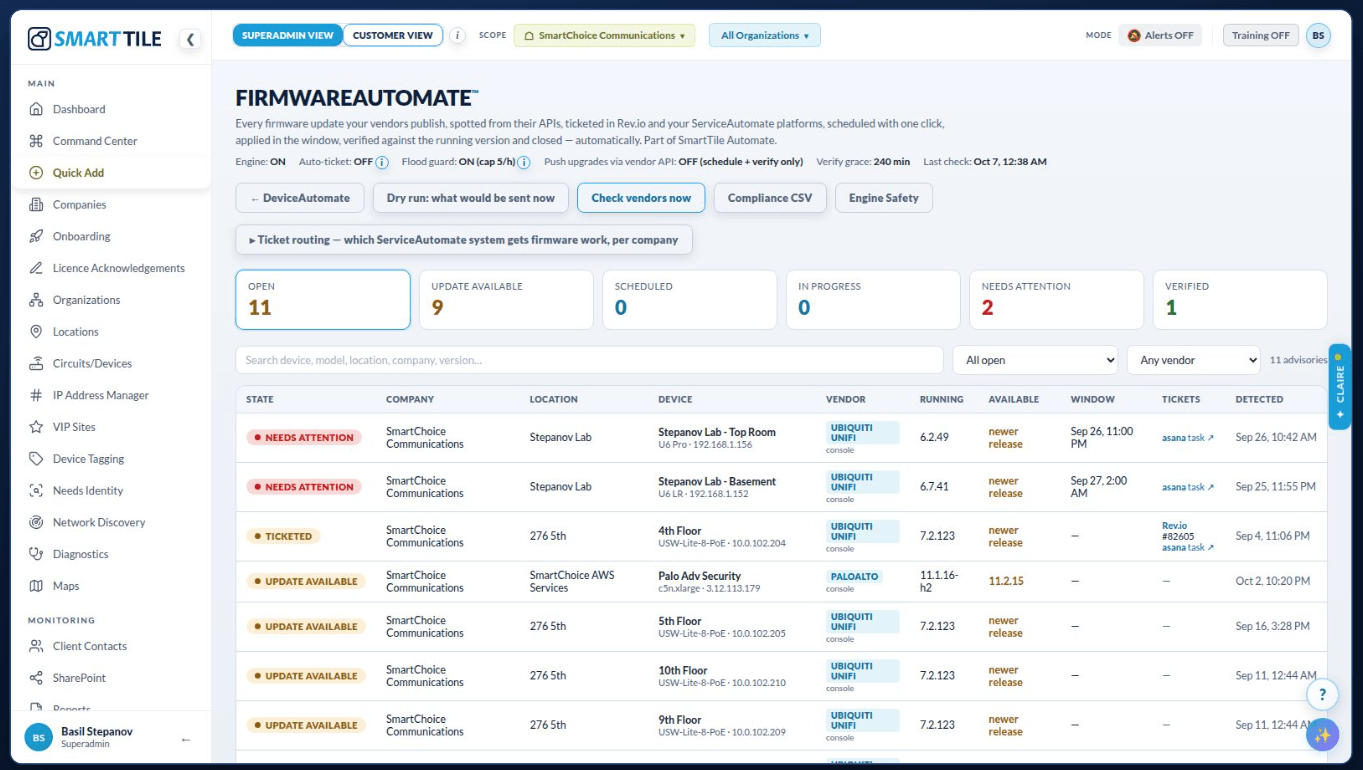
The solution’s four automation suites are fully integrated and work together: DeviceAutomate tracks device health and configuration activity; CloudAutomate identifies cloud incidents and routes tickets; ServiceAutomate synchronizes service records and updates; and CarrierAutomate coordinates carrier engagement through live API connections or Joey, SmartChoice’s AI voice agent.
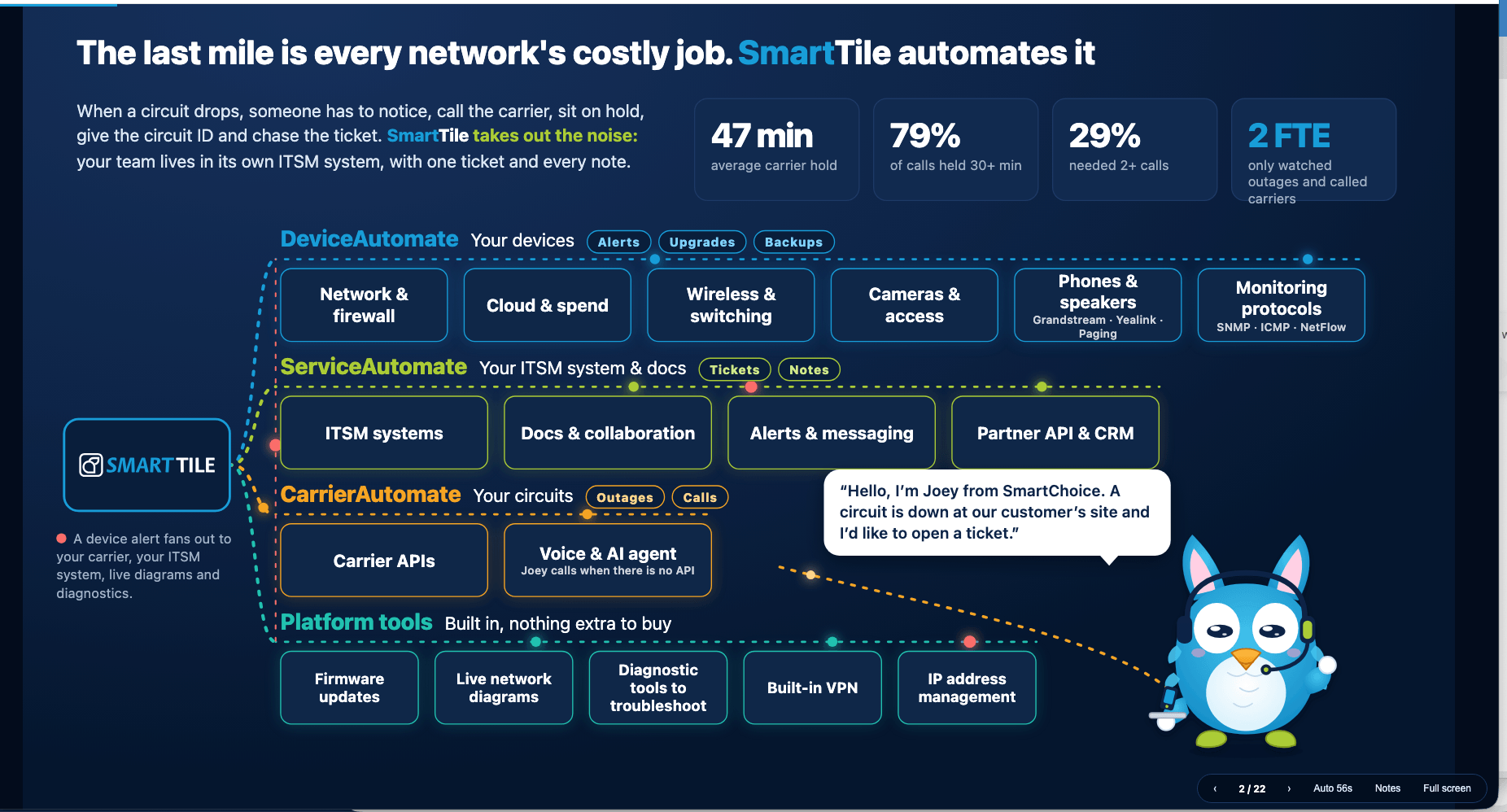
Engineers currently initiate Joey calls, which handle repair-line navigation, circuit details, ticket numbers and call documentation. When automation cannot complete the process, issues escalate to SmartChoice’s 24/7 network operations center.
SmartTile 2.0 also correlates related failures to reduce duplicate tickets and uses its own monitoring to verify recovery, with engineer review where required. Teams can continue using their existing tools while spending less time coordinating between them.
For businesses, the value lies in a more organized response and more capacity for work that requires human expertise.
What’s your current solution, and can you do better? To learn more, see how SmartTile 2.0 automates the operational work across your network and cloud at www.smartchoiceus.com/solutions/smarttile/.