The Monitoring Tool That Needs Its Own IT Project
“We still need on-prem collector servers.”
This one doesn’t show up in the sales demo. It shows up a few weeks into deployment, when your team realizes that monitoring your network first requires standing up more infrastructure on that network.
LogicMonitor, like several platforms in this category, relies on collectors: physical or virtual servers deployed inside each environment you want to monitor. Before you see a single dashboard, you’re provisioning hardware or VMs, patching them, and keeping them online. The tool meant to reduce your operational load starts by adding to it.
What a Collector Requirement Actually Costs You
It’s easy to treat “deploy a collector” as a one-time setup step. In practice, it’s a standing commitment at every site:
More hardware to manage. Whether it’s a physical box or a VM, someone owns its lifecycle: provisioning, patching, monitoring the monitor, and replacing it when it fails or ages out.
More attack surface. Every collector is another endpoint with credentials and network access sitting inside your environment. Security teams have to account for it in their threat model, not just their monitoring dashboard.
More cost that doesn’t show up in the subscription line. Server or VM licensing, the compute it runs on, and the staff time to maintain it are all real costs that sit outside the monitoring contract itself.
More failure points. If a collector goes down, so does visibility into everything behind it, at exactly the moment you need monitoring to be working.
Why This Hits Multi-Location Businesses Hardest
A single data center might absorb a collector or two without much friction. It’s a different story once you’re running monitoring across dozens or hundreds of locations, retail stores, school district campuses, healthcare sites, or portfolio companies spread across regions.
Each location can mean its own collector, its own maintenance schedule, its own point of failure. What started as a monitoring decision turns into a distributed infrastructure project your IT team now owns permanently, on top of everything else on their plate.
What Agentless, Cloud-Based Monitoring Looks Like Instead
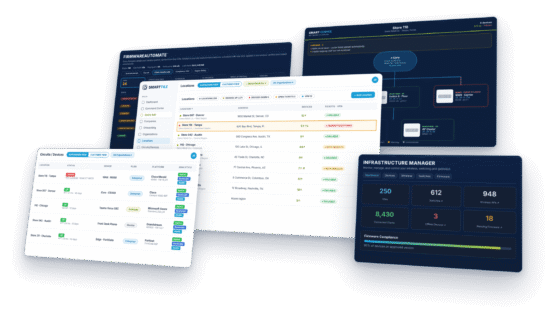
This is the gap SmartTile is built to close. Rather than deploying and maintaining collector infrastructure at every site, SmartTile monitors devices without requiring you to stand up local servers first:
No collector to provision. Nothing to rack, license, or patch at each location before monitoring starts.
Smaller attack surface. Fewer standing endpoints inside your network means less for security teams to inventory and defend.
Faster rollout across locations. Adding a new site doesn’t mean adding a new piece of infrastructure to deploy and babysit first.
Lower total cost. The real cost of a monitoring platform includes what it takes to keep it running. Removing the collector layer removes a cost center that never shows up in the vendor’s pricing page.
What to Ask Before You Deploy
If you’re evaluating a monitoring platform and this pain point sounds familiar, these questions belong in your RFP:
- Does this require an on-prem or virtual collector at every site, or is monitoring agentless?
- Who owns patching, uptime, and replacement of any required local infrastructure?
- What happens to visibility if a collector goes offline?
- What’s the true cost of deployment, including the infrastructure the vendor doesn’t bill for directly?
The Bottom Line
A monitoring platform should reduce what your team has to manage, not hand them a new server to keep alive first. If your current setup means deploying infrastructure before you get visibility, that’s not a monitoring solution, it’s a second IT project wearing a monitoring vendor’s logo.
See how SmartTile monitors your network without collector servers.