Carrier Ticket Automation: The Fix for the Biggest Cost Your NOC Never Measures
“Half a tech’s day disappears into carrier hold music, and nobody can prove it.”
If that sentence made you wince, you already know the problem. If it didn’t, that’s exactly why it’s the most expensive line item your NOC has never budgeted for.
The Hidden Cost of Manual Carrier Escalation
Carrier hold time doesn’t show up in a ticket report. It doesn’t get logged in a timesheet. It just quietly eats hours out of your technicians’ day, one circuit outage and one 45-minute hold queue at a time.
Because nobody tracks it, nobody can manage it. And you can’t fix what you can’t measure. That makes carrier hold time one of the single largest unmeasured costs sitting inside most NOC operations today, and one of the clearest cases for carrier ticket automation.
The Real Numbers Behind Carrier Hold Time
We stopped guessing and started measuring it on our own fleet. Over a defined period, SmartTile 2.0 tracked 1,428 carrier calls placed across 186 carrier tickets.
One circuit alone accounted for 47 hours of call time with the carrier in three months. Forty-seven hours, on a single circuit, before that ticket flow was moved onto the carrier’s API and automated.
That’s not an outlier. That’s what happens on every circuit, every month, when carrier escalation runs on hold music instead of automation.
How Carrier Ticket Automation Works in SmartTile 2.0
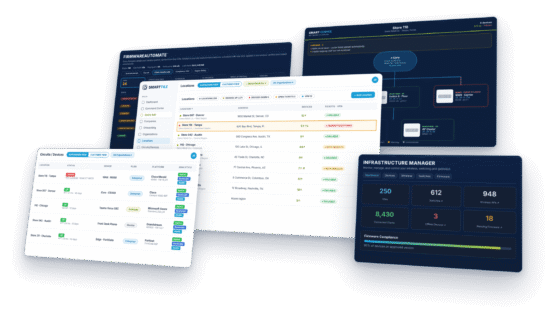
SmartTile 2.0 turns invisible hold time into a visible, trackable number, then gets to work eliminating it.
Every carrier interaction that runs through SmartTile is placed, recorded, transcribed, and timed automatically. Instead of a tech’s gut feeling that “carrier X is always slow,” you get a dashboard metric showing exactly how many hours are being spent, on which circuits, with which carriers.
From there, automation takes over. Where a carrier’s API is available, SmartTile routes ticket creation and status checks directly through it, cutting the phone call out of the workflow entirely. Where a live call is still required, the interaction is logged and timed so the cost is finally accounted for instead of absorbed.
The result: hold time stops being a feeling your team complains about and starts being a number you can reduce.
Why This Matters for NOC Cost Control
We measured the hold music. One circuit: 47 hours on the phone with a carrier in three months. It’s the biggest unmeasured cost in most NOCs, because nobody logs it.
SmartTile 2.0 logs it, and then automates it away.