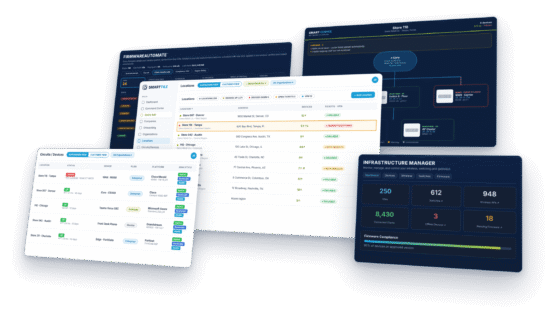
ISP Carrier Automation: Streamline Network Management
ISP carrier automation is no longer a “nice to have.” As broadband footprints expand, new access technologies roll out, and customers expect instant turn-ups, manual operations quickly become the bottleneck. The goal of ISP carrier automation is simple: deliver reliable services faster, with fewer errors, and at lower cost—without sacrificing carrier-grade resilience. This article breaks down what automation means in an ISP context, where to start, and how to avoid the traps that derail projects.
What is OSS BSS automation (and why ISPs care)?
When people ask what is OSS BSS automation, they’re usually trying to connect business processes to what actually happens in the network.
- BSS (Business Support Systems): sales, orders, billing, product catalog, CRM.
- OSS (Operations Support Systems): inventory, provisioning, assurance, fault management, performance, field operations.
BSS OSS integration for ISPs is the foundation of automation because it turns an order into an orchestrated set of network actions—then continuously assures that the service remains healthy.
Key outcomes:
- Faster installs and changes (less waiting on human queues)
- Lower error rates (fewer “fat-finger” configs)
- Better customer experience (accurate status, fewer repeat truck rolls)
- Measurable gains to reduce ISP operational costs automation

The automation domains that matter most (network + process)
Effective network automation in service providers spans multiple layers. Think of it as automation “planes”:
1) Provisioning and service activation
This is where broadband service activation automation creates the most visible ROI:
- ONT/ONU onboarding and profile assignment
- VLAN/QinQ, PPPoE/IPoE, DHCP options, RADIUS attributes
- CPE configuration (Wi‑Fi SSID, TR-069/TR-369/USP, QoS)
- Access policy, parental controls, speed tiers
If your priority is to automate ISP provisioning workflow, aim for “order-to-activate” with minimal manual steps and full auditability.
2) Subscriber lifecycle automation
Modern ISPs increasingly rely on automated subscriber management systems to handle:
- Service upgrades/downgrades
- Suspension/reactivation
- Move/transfer
- Entitlement changes for value-added services
3) Assurance and fault response
Automation isn’t only about turn-up. It’s also how to automate fault management:
- Correlate alarms, topology, and customer impact
- Auto-triage and enrich tickets
- Trigger safe remediation playbooks (with guardrails)
4) Network management at scale
Classic network management tools can be enhanced with automation:
- Standardized configuration templates
- Compliance checks and drift remediation
- Change windows with pre/post validation

SDN vs traditional carrier networks: what changes with automation?
The SDN vs traditional carrier networks debate often gets oversimplified. Automation works in both—but the “control points” differ:
- Traditional: CLI-driven devices, domain tools (BNG, OLT, IP/MPLS), and vendor-specific interfaces. Automation focuses on abstraction, templates, and safe change pipelines.
- SDN: centralized controllers and northbound APIs. Automation shifts toward intent, policy, and controller-driven enforcement.
In practice, many ISPs run hybrid networks. The best approach is to standardize service models and automate via APIs where possible, while still supporting legacy integrations.
Intent-based networking for service providers: practical, not magical
Intent-based networking for service providers means expressing “what” you want (service intent) rather than “how” to configure every device. For ISPs, intent typically maps to:
- “Deliver 1 Gbps service tier to subscriber X at location Y”
- “Ensure voice traffic gets priority and meets latency targets”
- “Apply security policy Z to all business customers”
Practical steps to adopt intent:
- Define service intents as versioned “products” (tiers, add-ons, SLAs).
- Map intents to validated service templates (per access tech).
- Add continuous verification: state reconciliation + testing.

Zero-touch provisioning best practices (for real-world ISPs)
Everyone wants “zero-touch,” but success depends on rigor. Here are zero-touch provisioning best practices that work across fiber, cable, fixed wireless, and mixed environments:
- Golden configurations + strict versioning: treat configs like code.
- Device identity and trust: certificates, secure bootstrap, inventory binding.
- Idempotent workflows: re-running a job shouldn’t break anything.
- Pre-checks and post-checks: validate optics, signal levels, session state, reachability.
- Rollback plans: automated revert on failed validation.
- Exception handling: automate the common path; route edge cases to a human queue with full context.
Carrier-grade monitoring and alerting: automation’s safety net
Automation without visibility is just faster failure. Carrier-grade monitoring and alerting should support:
- Multi-layer telemetry (device, transport, access, subscriber session, application KPIs)
- Event correlation (reduce alert storms)
- Customer impact analysis (which subscribers/services are affected)
- SLO/SLA tracking
- Closed-loop triggers (only when confidence is high)
Actionable tip: start by defining a small set of “golden signals” per domain (latency, loss, session churn, optical power, CPU/mem, error rates), then automate responses for the highest-confidence scenarios.

Carrier network automation guide: a phased rollout plan
If you want a simple carrier network automation guide, use a three-phase approach that reduces risk while proving value.
Phase 1: Standardize and instrument
- Normalize inventory (locations, ports, devices, services)
- Establish source of truth (SoT)
- Improve telemetry and log pipelines
- Build change control, approvals, and audit logging
Deliverable: fewer manual config variations and better troubleshooting.
Phase 2: Automate high-volume workflows
Focus on repeatable workflows with clear success criteria:
- New installs
- Speed changes
- Suspend/reactivate
- CPE swaps
Deliverable: measurable improvements in activation time and error rate.
Phase 3: Orchestrate end-to-end + closed-loop assurance
- Full order-to-cash-to-assure integration
- Advanced correlation and remediation playbooks
- Intent and policy-driven changes
Deliverable: the network “operates itself” for routine operations, with humans overseeing exceptions.
Network orchestration platforms comparison: how to evaluate options
A network orchestration platforms comparison should focus less on feature checklists and more on fit for your environment:
Evaluate platforms by:
- API coverage and extensibility (southbound adapters, northbound APIs)
- Service modeling (can you define reusable service templates/intents?)
- Workflow engine (retries, compensation, idempotency, approvals)
- Integration with BSS/OSS, ITSM, and SoT
- Multi-vendor support (critical for most ISPs)
- Observability (workflow tracing, metrics, logs)
- Security (RBAC, secrets management, audit trails)
Also consider operational reality: your team must be able to run and evolve it. “Best” often means “best network automation tools for ISPs” that match your staff skills, vendor landscape, and time-to-value goals.
Common pitfalls in OSS automation (and how to avoid them)
Many programs fail for predictable reasons. Here are common pitfalls in OSS automation and the countermeasures:
- No reliable inventory/SoT Fix: build/clean inventory first; enforce updates via workflow gates.
- Automating broken processes Fix: simplify the workflow before automating it; remove redundant approvals.
- One-off scripts instead of products Fix: adopt CI/CD, code review, testing, and modular design.
- Ignoring exception paths Fix: define “happy path” automation plus structured human escalation.
- Weak validation Fix: require pre/post checks; block completion until verification passes.
- No ownership model Fix: define who owns service models, adapters, and runbooks (NetOps/SRE).
Putting it together: an example order-to-activate workflow
A practical “happy path” to automate ISP provisioning workflow might look like:
- Order captured in BSS (product, address, desired date).
- OSS validates serviceability + reserves inventory/ports.
- Orchestrator assigns service intent and generates device/service configs.
- Access node provisioning (e.g., OLT/CMTS/FWA gateway), subscriber session policy (BNG/AAA), and IP assignment.
- CPE/ONT zero-touch bootstrap and policy application.
- Post-checks: session up, speed test threshold, voice registration (if applicable), telemetry OK.
- Service status pushed back to BSS/CRM; customer notified.
This is where isp carrier automation becomes tangible: fewer handoffs, faster turn-ups, and consistent outcomes.
Key takeaway
The fastest path to value in isp carrier automation is to start with standardization, then automate the highest-volume subscriber workflows, and finally add orchestration and closed-loop assurance. Prioritize BSS OSS integration for ISPs, enforce zero-touch provisioning best practices, and treat monitoring as the safety layer that makes automation carrier-grade. Done well, automation doesn’t just speed up operations—it measurably improves reliability and helps reduce ISP operational costs automation.