Your Platform Shouldn’t Need a Ticket to Change a Setting A five-minute change shouldn’t take three days. It usually does anyway. A configuration tweak goes into someone else’s ticket queue, and now it’s waiting behind everyone else’s requests too. What should have taken five minutes takes three days, if you’re lucky. What it costs The
Category: SmartTile
Your Cloud Provider Already Told You What’s Wrong. Is Anyone Reading It?
Your Cloud Provider Already Told You What’s Wrong. Is Anyone Reading It? Every major cloud platform ships with a security dashboard. AWS has GuardDuty and Security Hub. Microsoft has Defender for Cloud. These tools are constantly scanning your environment and flagging real problems. The findings are accurate, timely, and almost always ignored. What it costs
Network Diagram Automation: Why Your Visio File Was Only Ever Right Once
Network Diagram Automation: Why Your Visio File Was Only Ever Right Once “Our network diagram was accurate the day the consultant drew it.” Every NOC has one. It’s usually a Visio file, sitting on a shared drive, last touched by someone who doesn’t work there anymore. And every day since it was drawn, it’s gotten
Carrier Ticket Automation: The Fix for the Biggest Cost Your NOC Never Measures
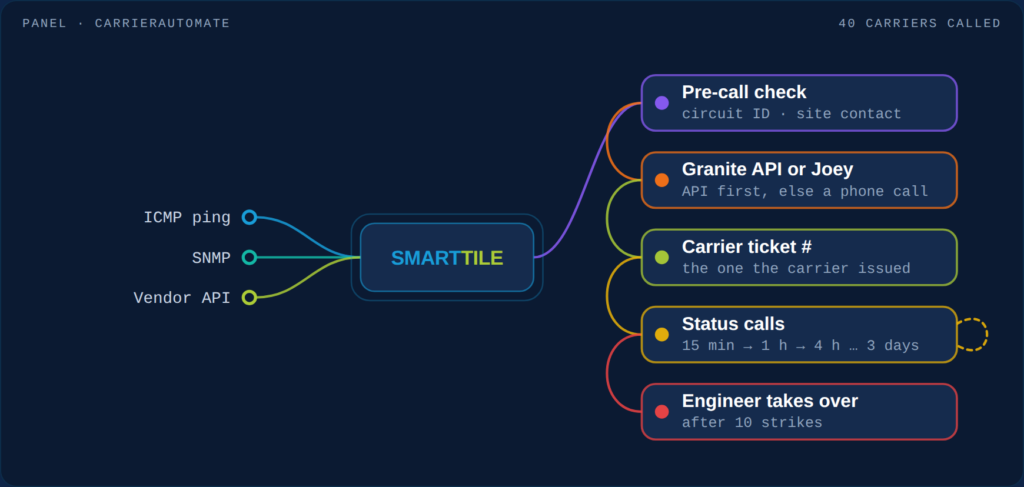
Carrier Ticket Automation: The Fix for the Biggest Cost Your NOC Never Measures “Half a tech’s day disappears into carrier hold music, and nobody can prove it.” If that sentence made you wince, you already know the problem. If it didn’t, that’s exactly why it’s the most expensive line item your NOC has never budgeted
The Monitoring Tool That Needs Its Own IT Project
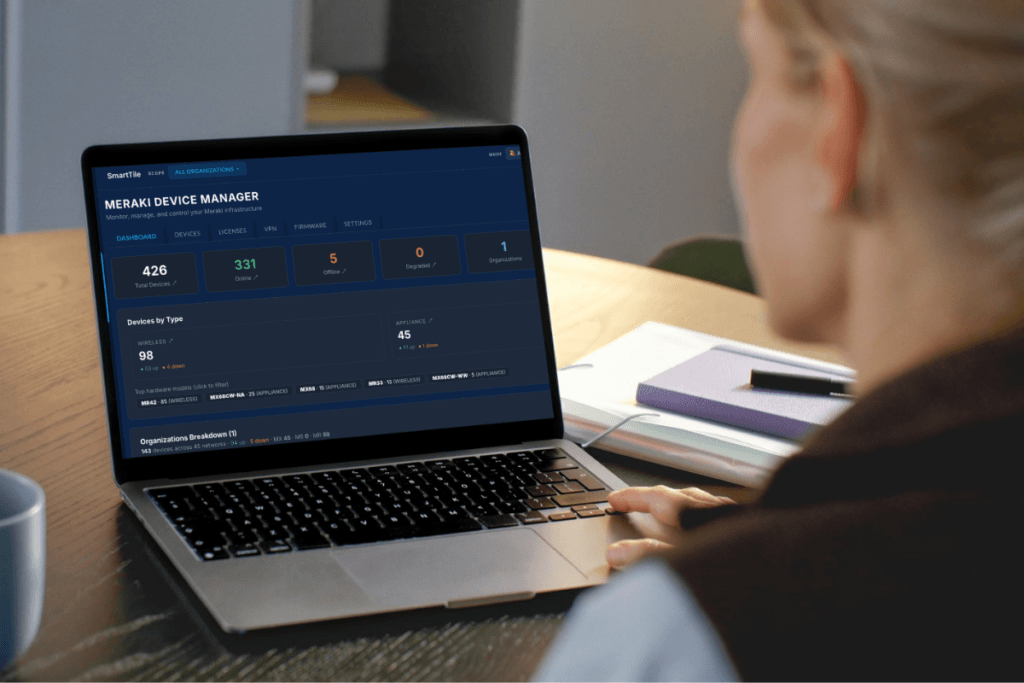
The Monitoring Tool That Needs Its Own IT Project “We still need on-prem collector servers.” This one doesn’t show up in the sales demo. It shows up a few weeks into deployment, when your team realizes that monitoring your network first requires standing up more infrastructure on that network. LogicMonitor, like several platforms in this
Why Did Adding Three Switches Blow Up Your Monitoring Bill?
Why Did Adding Three Switches Blow Up Your Monitoring Bill? “We went over our device count and got hit with overage fees.” If you run infrastructure across multiple locations, you’ve probably felt this one firsthand. You add a few switches mid-quarter, nothing dramatic, just normal growth. Then the invoice shows up 30 to 50 percent
Your Monitoring Tool Told You It’s Down. Now What?
Your Monitoring Tool Told You It’s Down. Now What? “It tells me something’s down. Then I still have to call the carrier.” If you run IT for a multi-location business, you’ve said some version of this sentence more times than you’d like. SolarWinds, PRTG, Auvik, whatever sits on your NOC screen right now, it’s very
Why SmartTile Is the Best Network Monitoring Software for Multi-Location Enterprises
Why SmartTile Is the Best Network Monitoring Software for Multi-Location Enterprises Managing network uptime across dozens or hundreds of locations shouldn’t mean juggling five different dashboards, waiting on hold with carriers, and finding out about an outage from an angry phone call. That’s the problem SmartTile was built to solve. In fact, it’s why it
The Future of Agentic AI Automation
The Future of Agentic AI Automation Agentic AI automation is rapidly shifting automation from “if-this-then-that” scripts into systems that can plan, decide, and act across tools, data, and teams. Instead of automating only one step at a time, modern AI process automation can coordinate whole workflows end-to-end: gathering context, choosing the next best action, executing
ISP Carrier Automation: Streamline Network Management
ISP Carrier Automation: Streamline Network Management ISP carrier automation is no longer a “nice to have.” As broadband footprints expand, new access technologies roll out, and customers expect instant turn-ups, manual operations quickly become the bottleneck. The goal of ISP carrier automation is simple: deliver reliable services faster, with fewer errors, and at lower cost—without