The Future of Agentic AI Automation
Agentic AI automation is rapidly shifting automation from “if-this-then-that” scripts into systems that can plan, decide, and act across tools, data, and teams. Instead of automating only one step at a time, modern AI process automation can coordinate whole workflows end-to-end: gathering context, choosing the next best action, executing it safely, and verifying results.
That change matters because most business work isn’t a single button-click—it’s a chain of decisions: follow-ups, approvals, exceptions, missing data, policy constraints, and handoffs. Agentic ai solutions aim to handle that messy middle with autonomous AI agents for workflows that can collaborate, escalate, and adapt.
What is Agentic AI?
Agentic AI is an approach where an AI system behaves like an “agent”: it can set goals, break them into tasks, use tools, and iterate until it reaches an acceptable outcome. Unlike a standard chatbot that only responds to prompts, an agent can:
- Plan a sequence of steps (e.g., “collect requirements → draft → review → send → log”)
- Call tools (calendar, CRM, ticketing, databases) via tool calling and function execution
- Reason over constraints (policies, budgets, permissions, deadlines)
- Recover from errors (missing data, API failures, ambiguous inputs)
- Ask for clarification or approval when confidence is low
In practice, agentic ai automation is often implemented as a loop: the agent observes the situation, decides what to do next, acts through tools, checks results, and repeats. That loop is what makes it different from simple intelligent automation or traditional macros.
Why Agentic AI Automation Is the “Next Layer” of Intelligent Automation
Many organizations already use intelligent automation for document extraction, chat support, or ticket routing. The next layer is orchestration: agents that can coordinate multiple automations and handle exceptions without constant human intervention.
Key benefits when automating business processes with AI using agentic approaches:
- Higher coverage of real workflows (not just happy paths)
- Faster cycle times through parallel work (multi-agent collaboration)
- Improved resilience via retries, fallbacks, and escalation policies
- Better customer and employee experience with fewer “dead ends”
This is where ai automation tools evolve from “task bots” into decision-capable workflow operators.
AI Agents vs RPA: What Actually Changes?
AI agents vs RPA is less about replacing RPA and more about upgrading what’s automatable.
RPA strengths
- Deterministic, auditable execution
- Great for repetitive UI steps
- Stable when applications don’t change
Agentic AI strengths
- Handles ambiguity (unstructured text, changing context, incomplete info)
- Adapts to new steps when something breaks
- Can choose among tools and strategies dynamically
A practical model is hybrid:
- Keep RPA for brittle UI tasks and regulated steps
- Add an agent as the “brain” that decides when and how to run those steps, validates outputs, and handles exceptions
That hybrid approach is often the fastest path to trustworthy ai process automation.
Core Building Blocks of an Agentic Automation System
To build robust agentic ai solutions, you need more than a language model. You need an AI agent orchestration framework that supports predictable execution and measurable outcomes.
1) Multi-Agent System Architecture (When One Agent Isn’t Enough)
A multi-agent system architecture splits responsibilities into specialized roles, such as:
- Planner agent: decomposes goals into tasks, sets success criteria
- Research/RAG agent: performs agent memory and knowledge retrieval
- Executor agent: handles tool calls and API actions
- Critic/Verifier agent: checks outputs against rules and evidence
- Supervisor agent: arbitrates disagreements, escalates to humans
This division improves quality and reduces single-agent overload, especially in long workflows.
2) Tool Calling and Function Execution
The operational leap comes from AI agent integration with APIs. Instead of “suggesting” actions, agents can do them—safely—through:
- CRM updates (create lead, log call, change stage)
- Ticketing actions (open, assign, request info)
- Payments and invoicing (draft invoices, validate amounts)
- Data pipelines (query warehouse, trigger jobs)
- Communication tools (send emails, schedule meetings)
Reliable tool calling and function execution requires:
- Strict schemas for inputs/outputs
- Permissioning and secrets management
- Idempotency (safe re-runs)
- Observable logs (who did what, when, and why)
3) Planning and Reasoning Loops
Most agentic systems run iterative cycles: plan → act → observe → refine. Planning and reasoning loops enable:
- Re-planning after tool errors
- Step-by-step progress tracking
- Conditional branching (approval required, budget exceeded, missing fields)
To keep loops safe and efficient, define:
- Maximum steps/timeouts
- Clear termination conditions (“done” means measurable)
- Human checkpoints for high-risk actions
4) Agent Memory and Knowledge Retrieval
Agents need context: policies, past interactions, customer history, product docs. But stuffing everything into a prompt doesn’t scale. Effective systems combine:
- Short-term memory: session context and recent tool outputs
- Long-term memory: user preferences, historical cases, key events
- Enterprise knowledge retrieval: searching internal documents and records
5) Retrieval Augmented Generation Agents (RAG Done Right)
Retrieval augmented generation agents ground responses in retrieved sources rather than guesswork. That’s essential for:
- Support agents referencing official troubleshooting steps
- HR agents citing policies and benefits rules
- Finance agents using current pricing and contract terms
RAG isn’t just “search + summarize.” It includes:
- Chunking and indexing strategies
- Metadata filters (region, product line, effective date)
- Citation capture for audit trails
- Confidence signals tied to retrieved evidence
Reducing Hallucinations in AI Agents (Without Killing Usefulness)
Reducing hallucinations in AI agents is both a product and engineering discipline. The key is to treat generation as one component in a controlled system.
Practical techniques:
- Evidence-first prompting: require retrieved support for claims
- Structured outputs: JSON schemas, typed fields, validation rules
- Verifier steps: a critic agent checks for unsupported statements
- Tool-grounded execution: prefer “look up via API” over “guess”
- Abstention policies: if confidence is low, ask or escalate
- Golden rules: never fabricate IDs, prices, policy clauses, or legal advice
A powerful pattern: make the agent produce a “decision record” containing the data it used, the tool results, and why it chose an action. This improves debugging and compliance.
LLM Agent Guardrails and Safety: The Non-Negotiables
LLM agent guardrails and safety become critical the moment agents can act. Guardrails should exist at multiple layers:
- Prompt and policy layer: role boundaries, prohibited actions, escalation rules
- Tool layer: allowlists, parameter limits, PII redaction, approval gates
- Data layer: row-level permissions, least-privilege access
- Runtime layer: rate limits, anomaly detection, sandboxing
- Human-in-the-loop: approvals for irreversible actions (refunds, deletions, contract sends)
Think of the agent as a junior operator: helpful, fast, but constrained by strong controls.
Monitoring and Evaluation for AI Agents: How You Know It Works
Monitoring and evaluation for AI agents is where many teams fall behind. You need more than “it seems fine.” Track:
- Task success rate (end-to-end completion)
- Tool-call accuracy (schema validity, parameter correctness)
- Escalation rate (how often humans are needed—and why)
- Cost and latency (per workflow, per step)
- Safety events (blocked actions, policy violations)
- Customer impact (CSAT, resolution time, re-open rate)
For evaluation, create a realistic test suite:
- Known tricky cases (edge conditions, missing fields)
- Regression scenarios after model or prompt updates
- Role-based permission tests
- “Adversarial” prompts attempting policy bypass
If you’re comparing best AI agent platforms, evaluate their observability and eval tooling as seriously as their model support.
Where Agentic AI Automation Delivers ROI Fast (Examples)
The best starting points share three traits: high volume, clear success metrics, and accessible tools/APIs.
Common high-ROI use cases:
- Sales ops: enrich leads, draft outreach, schedule follow-ups, update CRM
- Customer support: triage, retrieve solutions, run diagnostics, open/close tickets
- Finance ops: invoice intake, exception routing, payment status follow-ups
- IT ops: password resets, access requests, incident runbooks
- Procurement: vendor onboarding, policy checks, contract data extraction
A practical example flow (support):
- Agent reads ticket + customer history
- Uses retrieval augmented generation agents to pull the latest approved runbook
- Runs tool-based diagnostics
- Proposes a fix; if high-risk, requests approval
- Executes changes via API
- Verifies outcome and documents the resolution
That’s agentic ai automation as an operator—not a text generator.
Network Automation: A Natural Fit for Agentic AI
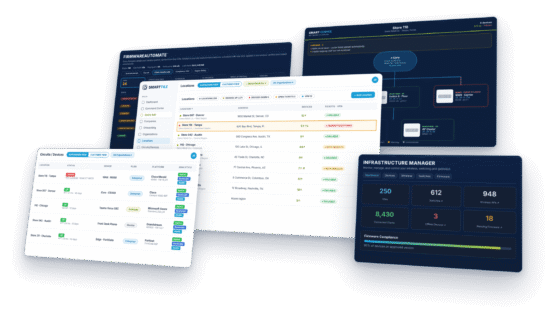
Network automation is a particularly strong domain for agentic ai automation because networks already have mature sources of “ground truth” (configuration state, routing tables, telemetry, logs) and well-defined change-control practices. The opportunity is to move from isolated scripts to closed-loop automation: agents that detect issues, propose remediation, execute changes through approved interfaces, and verify outcomes against objective signals.
In netops terms, agentic ai solutions can act as a workflow operator across the tooling stack—ITSM, network controllers, configuration repositories, and observability—rather than as a standalone “AI that writes configs.” Typical high-value patterns include:
- Incident triage and correlation: summarize alerts, correlate events across syslog/telemetry/flows, and generate a ranked root-cause hypothesis with evidence
- Change preparation: generate change plans, pre-check commands, and rollback steps; validate intent against policy (ACL standards, segmentation rules, routing constraints)
- Safe execution via tools: push changes through network automation tools and controllers (rather than ad-hoc CLI), with guardrails like allowlists, change windows, and approval gates
- Post-change verification: confirm that KPIs and reachability tests match success criteria; automatically open a ticket and roll back if verification fails
The same governance principles apply more strictly in network automation: durable audit trails, diff-based change records, least-privilege access, and deterministic verification. When implemented well, agentic automation reduces mean time to resolution, lowers change failure rates, and makes network operations more repeatable under scale and complexity.
The Future: From Automation Scripts to Autonomous Workflows
The future of agentic ai automation is not fully hands-off “AI running the company.” It’s autonomy with boundaries: agents that handle routine execution, surface decisions at the right moments, and produce verifiable work trails.
Expect near-term progress in:
- More reliable planning and reasoning loops with fewer steps
- Better long-context retrieval augmented generation agents
- Stronger LLM agent guardrails and safety by default
- Standardized evaluation and monitoring and evaluation for AI agents
- Mature multi-agent system architecture patterns for enterprises
Takeaway
Agentic AI automation is the next evolution of intelligent automation: systems that can plan, use tools, and iterate toward outcomes—while staying governed and measurable. If you focus on tool calling and function execution, strong retrieval, robust guardrails, and disciplined monitoring, you’ll move from isolated automations to autonomous AI agents for workflows that deliver real business value.