What Is AI Networking?
AI networking is the use of artificial intelligence, machine learning, automation, and data analytics to help design, operate, secure, and improve computer networks. Instead of relying only on manual configuration and reactive troubleshooting, AI networking systems learn from network behavior, detect patterns, recommend actions, and often automate routine operational tasks.
At a basic level, the goal is simple: make networks smarter, faster to manage, and more reliable. As organizations depend on cloud applications, hybrid work, connected devices, and real-time digital services, traditional network management can become too complex for IT teams to handle manually. AI networking helps reduce that complexity by turning large volumes of network data into useful insights and actions.
In practice, AI networking can support everything from network monitoring and performance analysis to network optimization, anomaly detection, capacity planning, incident response, and policy enforcement. It is not a replacement for skilled IT professionals. Instead, it acts as an intelligent operational layer that helps teams make better decisions with less manual effort.
A simple definition of AI networking
AI networking refers to networking systems that use artificial intelligence to understand, manage, and improve network performance and operations.
These systems collect data from devices, applications, users, traffic flows, logs, alerts, and performance metrics. They then analyze that data to identify what is normal, what is unusual, and what may need attention. Over time, the system can become better at recognizing patterns, predicting issues, and recommending or taking action.
For example, an AI networking platform might notice that application latency increases every weekday at a certain time, identify the likely cause, and recommend a configuration change. In a more automated environment, it may apply a predefined fix, reroute traffic, or adjust policies without requiring an engineer to investigate every detail manually.
Why AI networking matters
Modern networks are no longer simple collections of switches, routers, and cables. They often include cloud infrastructure, wireless environments, remote users, IoT devices, edge locations, security tools, virtual networks, and multiple service providers. Each layer produces data, and each layer can affect the user experience.
This creates several challenges for IT teams:
- Too many alerts to review manually
- Limited visibility across hybrid and cloud environments
- Slow root-cause analysis when performance problems occur
- Repetitive configuration and maintenance tasks
- Difficulty predicting capacity needs
- Growing security and compliance requirements
- Increased pressure to keep applications available at all times
AI networking helps by analyzing data at a scale and speed that humans cannot match alone. It can surface the most important issues, reduce noise, and help IT teams focus on higher-value work.
How AI networking works
AI networking usually depends on a continuous cycle of data collection, analysis, decision-making, and action. While every platform is different, most AI-enabled network systems follow a similar process.
1. Data collection
The system gathers information from across the network. This may include traffic data, device health, configuration changes, user behavior, application performance, security events, bandwidth usage, and historical trends.
The more complete and accurate the data, the more useful the AI insights can be. This is why strong network monitoring is often the foundation of AI networking. Without visibility, the system cannot understand what is happening or detect meaningful changes.
2. Pattern recognition
Machine learning models analyze the collected data to identify normal behavior. For example, the system may learn typical bandwidth usage for a branch office, expected latency for a business application, or normal login patterns for certain users.
Once a baseline is established, the system can detect deviations. These deviations may indicate congestion, misconfiguration, device failure, unusual traffic, or a potential security concern.
3. Insight and recommendation
After identifying an issue or opportunity, the system may explain what it found and suggest next steps. This can help IT teams prioritize problems based on severity, user impact, or business importance.
Instead of presenting a long list of raw alerts, AI networking tools can provide more useful context, such as:
- Which users or applications are affected
- When the issue started
- What changed recently
- Which network segment is involved
- Whether the problem is likely related to capacity, configuration, hardware, or policy
4. Automation and remediation
Some AI networking systems go beyond recommendations and automate approved actions. This may include adjusting routing paths, applying configuration templates, opening tickets, restarting services, updating policies, or escalating incidents.
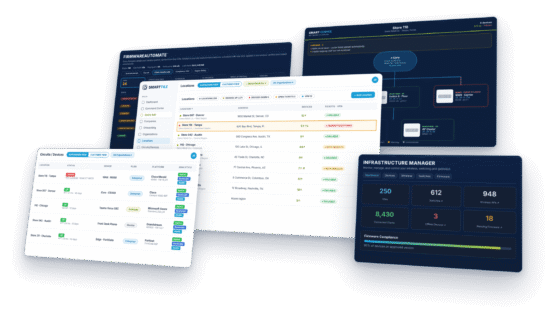
Automation is especially valuable for repetitive work. For example, SmartTile features automation that can take a significant burden off manual IT operations by helping teams streamline routine tasks and reduce the amount of hands-on effort required to manage network environments. This kind of automation allows IT staff to spend less time on repetitive operational work and more time on strategic planning, security, and user experience.
Key components of AI networking
AI networking can include several technologies and practices working together. The exact mix depends on the organization’s needs, network architecture, and maturity level.
Network monitoring
Network monitoring tracks the health, availability, and performance of network devices and services. In an AI networking environment, monitoring becomes more intelligent because the system does not simply report that something happened. It can help explain why it happened, what it affects, and what should happen next.
This can reduce alert fatigue and make troubleshooting faster. Instead of reviewing hundreds of notifications, teams can focus on the issues that matter most.
Network optimization
Network optimization is the process of improving network performance, reliability, and efficiency. AI can help identify bottlenecks, recommend better traffic paths, detect underused or overloaded resources, and support more effective capacity planning.
For organizations with distributed users and cloud-based applications, network optimization is especially important. Even small improvements in latency, routing, or bandwidth usage can have a noticeable impact on productivity and customer experience.
Predictive analytics
Predictive analytics uses historical data to forecast future issues. In networking, this may mean predicting when a link is likely to become congested, when device capacity may be exceeded, or when a recurring issue is likely to happen again.
This shifts IT operations from reactive to proactive. Rather than waiting for users to report a problem, teams can address risk before it disrupts the business.
Automated troubleshooting
AI networking tools can help speed up root-cause analysis by correlating events across the environment. For example, if users complain about slow application performance, the system may compare application metrics, wireless data, WAN performance, DNS response times, and recent configuration changes.
This helps narrow the investigation and reduces the time required to identify the source of the issue.
Policy-based management
Many modern network environments rely on policies to control access, segmentation, quality of service, and security behavior. AI can help ensure policies are applied consistently and can highlight conflicts or misalignments.
In more advanced environments, AI may also recommend policy adjustments based on observed behavior and business intent.
AI networking vs. traditional networking
Traditional networking often depends heavily on manual configuration, fixed rules, static thresholds, and human-led troubleshooting. This approach can work well in smaller or simpler environments, but it becomes harder to scale as networks grow more dynamic.
AI networking adds intelligence and automation to the operational model. It can learn from data, detect subtle changes, correlate events, and support faster decision-making.
The main difference is not that AI networking removes human control. The difference is that it gives IT teams better visibility and more effective tools. Engineers still define goals, approve policies, manage architecture, and oversee risk. AI helps them operate with more speed and confidence.
Common use cases for AI networking
Organizations may adopt AI networking for many reasons, but several use cases are especially common.
Faster incident response
When something goes wrong, AI can help identify the likely cause and affected areas more quickly. This can reduce downtime and improve service reliability.
Better user experience
AI networking can help measure and improve the experience of employees, customers, and application users. It can identify whether performance issues are caused by the local network, wireless coverage, internet connectivity, cloud services, or application behavior.
Reduced manual operations
Routine tasks can consume a large amount of IT time. Automation helps reduce repetitive work, such as basic diagnostics, ticket creation, configuration checks, and standard remediation steps.
Improved security visibility
AI can help detect unusual network behavior that may indicate a security issue. While AI networking is not the same as a full cybersecurity platform, it can support security teams by identifying suspicious traffic patterns, unexpected device behavior, or policy violations.
Capacity planning
AI can analyze historical usage and growth trends to help teams plan for future capacity needs. This can support budgeting, infrastructure upgrades, and cloud or WAN planning.
What are AI native networking solutions?
AI native networking solutions are platforms or architectures designed with AI and automation as core capabilities rather than optional add-ons. In other words, intelligence is built into how the network is monitored, managed, optimized, and secured.
These solutions typically focus on continuous learning, automated insights, proactive recommendations, and simplified operations. They may include AI-driven analytics, intent-based networking, automated remediation, and integrations with IT service management or security tools.
The value of AI native networking solutions is that they can help organizations move away from fragmented, manual workflows. Instead of jumping between separate tools and dashboards, teams can use a more connected approach to understand and manage the network.
Benefits of AI networking
The benefits of AI networking depend on how it is implemented, but common advantages include:
- Faster troubleshooting and root-cause analysis
- Stronger network monitoring with more useful insights
- Better network optimization across complex environments
- Reduced alert fatigue for IT teams
- More consistent policy enforcement
- Improved reliability and application performance
- Better planning for capacity and growth
- Less manual effort for repetitive operational tasks
- More time for IT teams to focus on strategic priorities
For many organizations, the biggest benefit is operational efficiency. AI networking helps teams keep pace with growing complexity without simply adding more tools, more alerts, or more manual processes.
Challenges to consider
AI networking can be powerful, but it is not automatic success. Organizations should consider a few practical challenges before adopting it.
First, data quality matters. If the system receives incomplete or inaccurate data, its recommendations may be less useful. Second, automation should be introduced carefully, especially for changes that affect security, routing, or critical services. Many teams start with recommendations and human approval before moving toward automated remediation.
Third, AI networking still requires skilled people. IT teams need to understand network fundamentals, define policies, validate recommendations, and manage exceptions. AI can reduce operational burden, but it does not eliminate the need for expertise.
Finally, integration matters. AI networking is most useful when it connects with existing tools, workflows, and business priorities. A standalone dashboard may offer insight, but connected automation can create greater long-term value.
How to think about AI networking for your organization
If you are evaluating AI networking, start with the problems you want to solve. Are you trying to reduce downtime, improve network monitoring, automate repetitive work, optimize application performance, or gain better visibility across cloud and branch environments?
Once your goals are clear, look for capabilities that support them directly. Useful questions include:
- What data sources can the solution analyze?
- Does it support real-time and historical visibility?
- Can it explain the root cause of issues?
- Does it provide actionable recommendations?
- What tasks can it automate safely?
- How does it integrate with existing IT workflows?
- Can teams control which actions are automated?
- Does it support current and future network environments?
The best approach is usually practical and phased. Start with visibility and insights, then expand into automation where the value is clear and the risk is manageable.
The bottom line
AI networking brings artificial intelligence and automation into the way networks are monitored, managed, and improved. It helps IT teams understand complex environments, respond to problems faster, optimize performance, and reduce the manual workload involved in day-to-day operations.
As networks continue to support more users, devices, applications, and locations, manual management alone becomes harder to sustain. AI networking offers a smarter operational model: one that combines human expertise with intelligent systems that can analyze data, identify issues, recommend improvements, and automate routine actions.
For organizations looking to improve reliability, simplify operations, and make better use of IT resources, AI networking is becoming an important part of modern network strategy.