Broadband Network Capacity Planning
Broadband networks are judged by what customers feel: fast page loads, stable video calls, low-latency gaming, reliable streaming, and consistent performance during the busiest hours of the day. Behind that experience is a disciplined process of forecasting demand, measuring constraints, and investing in the right parts of the network before congestion becomes visible.
That process is broadband network capacity planning. Done well, it helps internet service providers, municipalities, campus networks, and enterprise broadband teams balance performance, capital spending, and customer satisfaction. Done poorly, it leads to oversubscribed links, preventable outages, rushed upgrades, rising churn, and support teams fielding the same “slow internet” complaints every evening.
This guide explains how network capacity planning works, which metrics matter, how to forecast demand, and which network bandwidth optimization tactics can delay or reduce unnecessary infrastructure spend.

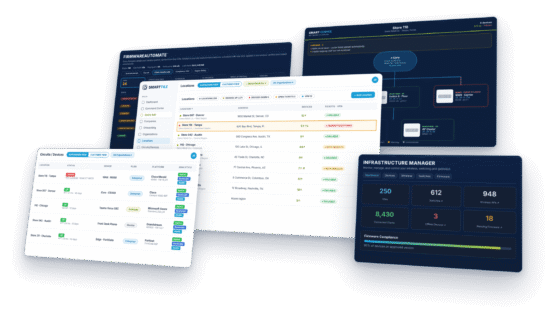
Caption: Capacity planning starts with visibility into traffic, utilization, and performance across the full broadband network.
What Is Broadband Network Capacity Planning?
Broadband network capacity planning is the process of determining how much network capacity is needed now and in the future to deliver reliable service across access, aggregation, transport, peering, and core network layers.
It answers questions such as:
- How much bandwidth is currently being used during peak periods?
- Which nodes, links, ports, or service groups are approaching congestion?
- How fast is subscriber usage growing?
- Where will new demand appear because of customer growth, higher speed tiers, new applications, or business expansion?
- Which upgrades should happen first?
- Can performance improve through configuration, routing, caching, or traffic engineering before adding new infrastructure?
The goal is not simply to buy more capacity. The goal is to provide the right capacity, in the right location, at the right time, at the right cost.
For broadband providers in the United States, this is especially important because customer expectations keep rising. Households may have multiple connected TVs, phones, laptops, cameras, smart speakers, gaming systems, and work-from-home applications running at once. A network that looked healthy based on average usage can struggle when real demand concentrates during evening streaming hours, major software updates, live sports, school breaks, or weather-related work-from-home spikes.
Why Capacity Planning Matters
Capacity planning is both a technical discipline and a business discipline. It directly affects customer experience, upgrade timing, budget allocation, and competitive positioning.
Strong capacity planning helps organizations:
- Maintain consistent broadband performance during peak usage windows
- Reduce latency, packet loss, jitter, and buffering
- Identify bottlenecks before they affect a large customer base
- Prioritize capital investments based on evidence instead of guesswork
- Support higher speed tiers and new service packages
- Improve customer retention by reducing repeat performance complaints
- Coordinate engineering, finance, operations, and customer support teams
- Avoid overbuilding in areas where optimization would solve the issue
Poor planning often shows up as a familiar pattern: a network looks acceptable during the day, then deteriorates at night. Speed tests become inconsistent. Video buffering increases. Gamers report lag. Support tickets rise. Engineers scramble to split nodes, upgrade backhaul, add ports, or renegotiate upstream capacity under pressure.
A mature capacity planning strategy prevents that cycle by creating a continuous planning rhythm instead of waiting for congestion to become a customer-facing emergency.
The Core Layers of Broadband Capacity
Broadband capacity is not one single number. A customer’s experience depends on multiple layers working together. A bottleneck at any layer can degrade performance even if other parts of the network have room to spare.
Access Network
The access layer connects customers to the broadband network. Depending on the provider, this may include fiber, cable, DSL, fixed wireless, satellite, or hybrid architectures.
Capacity planning at this layer may focus on:
- Passive optical network split ratios
- Cable service group utilization
- Wireless sector capacity and spectrum efficiency
- Customer premises equipment performance
- Last-mile signal quality
- Upstream and downstream traffic balance
This is often where customer complaints first appear because access constraints are closest to the user.
Aggregation Network
Aggregation networks collect traffic from many access nodes and move it toward regional or core infrastructure. These links and devices may serve large clusters of customers, so a bottleneck here can affect entire neighborhoods, towns, or service areas.
Important considerations include:
- Uplink utilization
- Router and switch port capacity
- Link redundancy
- Oversubscription ratios
- Regional traffic growth
- Failure scenarios, such as whether surviving links can carry traffic after a fiber cut or device failure
Core and Transport Network
The core network carries traffic between regions, data centers, internet gateways, and service platforms. Capacity planning here is less about a single neighborhood and more about total network scale and resilience.
Key planning areas include:
- Backbone link utilization
- Routing efficiency
- Data center interconnect capacity
- Resilient path design
- Hardware forwarding capacity
- Maintenance and failover headroom
Internet, Peering, and Content Delivery
Many broadband performance issues are influenced by where traffic enters and exits the provider network. Streaming, gaming, cloud platforms, software updates, and video conferencing all place heavy demand on interconnection points.
Planning should account for:
- Transit capacity
- Peering relationships
- Internet exchange participation
- Content delivery network cache placement
- Regional traffic localization
- Cloud service connectivity
A provider may have sufficient access capacity but still deliver poor performance if peering or transit paths are congested during peak hours.
Key Metrics for Network Performance Analysis
Effective network performance analysis depends on consistent measurement. The best capacity plans are built from trend data, not one-time snapshots.
Peak Utilization
Average utilization can hide serious problems. A link that averages 35 percent utilization over 24 hours may still hit 95 percent every evening. Capacity planning should focus heavily on peak busy-hour usage.
Useful views include:
- 95th percentile utilization
- Evening peak utilization
- Weekend versus weekday patterns
- Seasonal peaks
- Utilization during special events or outages
Throughput
Throughput measures how much data is successfully delivered over time. It helps planners understand whether customers are receiving the performance they expect from their subscribed service tiers.
Throughput should be analyzed by location, speed tier, technology type, and time of day. This makes it easier to distinguish between localized congestion and broader architectural issues.
Latency
Latency is the time it takes data to travel from one point to another. High latency can make a connection feel slow even when raw bandwidth appears sufficient.
Latency is especially important for:
- Video conferencing
- Online gaming
- Voice over IP
- Remote desktop applications
- Cloud-based business tools
Rising latency during peak usage is often an early warning sign of congestion.
Packet Loss
Packet loss occurs when data packets fail to reach their destination. Even small amounts of loss can degrade real-time applications and cause retransmissions that consume more bandwidth.
Capacity planning should track packet loss across access, aggregation, core, and interconnection points to pinpoint where degradation begins.
Jitter
Jitter is variation in packet delay. It matters most for voice, video, gaming, and other real-time services. A network may have acceptable average latency but still perform poorly if jitter is high.
Subscriber Growth and Usage per Subscriber
Capacity demand grows in two ways:
- More subscribers are added to the network
- Existing subscribers use more data, more often, on more devices
A reliable forecast accounts for both. Many networks are not strained by subscriber count alone. They are strained by rising usage intensity per household or business.
Service Tier Mix
As customers upgrade to higher speed tiers, the network must support more simultaneous demand. Not every customer uses the full advertised speed at once, but higher tiers can increase peak usage and change traffic patterns.
Capacity plans should track how many customers subscribe to each tier and how that mix is changing over time.
A Practical Capacity Planning Framework
A useful broadband network capacity planning framework should be repeatable, measurable, and easy to communicate across teams. The following process works for many broadband environments.
Step 1: Define Service Objectives
Start by defining what “good performance” means for your network. Capacity targets should connect engineering metrics to customer experience.
Examples of service objectives include:
- Keep peak link utilization below a defined threshold
- Maintain low latency during busy hours
- Reduce packet loss in oversubscribed service groups
- Support planned subscriber growth for the next 12 to 36 months
- Preserve enough failover capacity during maintenance or outages
- Meet internal service-level targets for residential, business, or wholesale customers
Without clear objectives, capacity planning becomes reactive. Teams may know a link is “busy” but disagree on whether it requires action.
Step 2: Build a Network Inventory
Capacity planning requires an accurate view of the assets that carry traffic. This includes physical infrastructure, logical topology, hardware limits, software versions, and service relationships.
Your inventory should include:
- Access nodes and service areas
- Fiber routes and transport links
- Routers, switches, and optical equipment
- Port speeds and available slots
- Upstream providers and peering points
- Customer counts by area and service tier
- Redundancy and failover paths
- Known constraints, such as power, space, cooling, or permitting issues
Inventory accuracy matters because a forecast is only useful if planners know which upgrades are physically and operationally possible.
Step 3: Collect Traffic and Performance Data
Next, collect data from monitoring systems, network devices, customer experience platforms, speed testing systems, and support records.
Important data sources may include:
- Interface counters
- Flow records
- Latency and packet loss probes
- Customer speed test results
- Device telemetry
- Trouble tickets
- Outage reports
- Installation and upgrade records
- Usage trends by service group or region
The most useful data is time-based. A single reading may show what is happening now, but trend data reveals whether a link is stable, improving, or moving toward congestion.
Step 4: Identify Bottlenecks
A bottleneck is any constraint that limits performance. It may be physical, logical, operational, or economic.
Common broadband bottlenecks include:
- Oversubscribed access nodes
- Insufficient backhaul from access to aggregation
- Congested aggregation uplinks
- Under-provisioned internet transit
- Inefficient routing paths
- Saturated peering links
- Hardware forwarding limits
- Poor Wi-Fi performance inside the customer premises
- Legacy equipment that cannot support modern speed tiers
It is important to separate network-side congestion from in-home or customer-side issues. For example, a customer may experience slow speeds because of outdated Wi-Fi equipment even when the provider network has enough capacity. Both issues matter, but they require different solutions.
Step 5: Forecast Demand
Forecasting is the heart of network capacity planning. The objective is to estimate when and where current capacity will no longer support expected demand.
A strong forecast considers:
- Historical traffic growth
- Subscriber growth projections
- New housing or business development
- Speed tier upgrades
- Seasonal demand patterns
- School calendars and remote work trends
- Streaming and gaming usage
- New product launches
- Planned marketing campaigns
- Network expansion projects
A simple forecast might use recent growth rates to project future peak utilization. A more advanced forecast may segment demand by region, access technology, customer type, and application category.
For example, a fiber neighborhood with rapid new construction may need a different model than a mature cable service area with stable subscriber counts but rising evening video traffic.
Step 6: Model Headroom and Trigger Points
Headroom is the unused capacity reserved for growth, traffic bursts, failover, and operational safety. A network running close to its limits may appear efficient, but it has little room for unexpected demand or failures.
Capacity trigger points define when action is required. They should be specific enough to guide decisions.
Example trigger points might include:
- Review required when a link regularly exceeds a moderate utilization threshold
- Upgrade planning required when busy-hour utilization crosses a higher threshold
- Immediate mitigation required when congestion causes measurable latency, packet loss, or customer complaints
- Resilience review required when failover paths cannot carry expected traffic
The exact thresholds depend on architecture, business goals, redundancy model, and customer expectations. The key is to set triggers in advance so teams do not debate every case from scratch.
Step 7: Compare Upgrade and Optimization Options
Not every capacity issue requires a major build. Sometimes the best answer is a physical upgrade. Other times, network bandwidth optimization can deliver meaningful relief.
Potential options include:
- Add access capacity through node splits, additional wavelengths, spectrum improvements, or fiber expansion
- Upgrade aggregation links or router ports
- Add transport capacity between markets or data centers
- Improve peering or transit capacity
- Deploy or expand content caching
- Adjust routing policies to balance traffic
- Reconfigure oversubscribed links
- Improve quality of service policies for latency-sensitive traffic
- Replace hardware that has reached forwarding or port-density limits
- Improve customer premises equipment where in-home bottlenecks are common
The best capacity planning strategies evaluate cost, speed of deployment, operational complexity, risk, and customer impact.
Step 8: Prioritize Projects
Most organizations have more potential upgrades than available budget or crew capacity. Prioritization ensures the most important work happens first.
Consider ranking projects by:
- Number of customers affected
- Severity of performance degradation
- Revenue impact
- Risk of service-level failure
- Growth rate in the affected area
- Time required to implement
- Dependency on permits, construction, vendors, or equipment lead times
- Opportunity to combine with planned maintenance or expansion work
A high-growth area with rising packet loss may deserve priority over a lightly used link that looks inefficient on paper but does not affect customer experience.

Caption: A layered capacity model helps teams locate bottlenecks and choose the right upgrade path.
Network Bandwidth Optimization Before You Build
Adding capacity is sometimes necessary, but optimization should be part of every planning process. Network bandwidth optimization improves how existing capacity is used.
Improve Traffic Engineering
Traffic engineering distributes traffic across available paths more efficiently. If one path is congested while another has spare capacity, routing changes may improve performance without new construction.
Common techniques include:
- Adjusting routing preferences
- Balancing traffic across multiple links
- Reviewing asymmetric routing
- Optimizing backbone paths
- Steering traffic toward better peering locations
Use Content Caching Strategically
Caching stores popular content closer to users. This can reduce transit demand, improve streaming performance, and lower latency for frequently accessed content.
Caching is especially useful when a large share of traffic comes from video, software updates, gaming downloads, or other repeatable content.
Review Peering and Transit Design
Interconnection strategy has a major impact on broadband performance. If traffic travels too far or enters through congested routes, customers may experience problems even when the access network is healthy.
Capacity planners should review:
- Which networks generate the most traffic
- Where traffic enters and exits
- Whether additional peering locations would reduce congestion
- Whether transit links have adequate peak headroom
- Whether content providers can connect more directly
Segment Traffic by Application Sensitivity
Not all traffic has the same performance requirements. A software download can tolerate delay better than a voice call or gaming session. Quality of service policies can help protect latency-sensitive applications when used carefully and transparently.
The goal is not to unfairly restrict usage. The goal is to manage congestion so real-time services remain usable while long-running bulk transfers continue in the background.
Reduce Waste from Misconfiguration
Some capacity problems are caused or worsened by configuration issues. Regular audits can uncover:
- Incorrect port settings
- Routing loops or inefficient paths
- Unused redundant links
- Poor load balancing
- Legacy policies that no longer match traffic patterns
- Device CPU or memory constraints mistaken for bandwidth problems
Optimization is not a substitute for long-term investment, but it can buy time, improve reliability, and make future upgrades more targeted.
Capacity Planning Strategies by Network Type
Different broadband architectures require different planning assumptions.
Fiber Networks
Fiber networks often offer strong scalability, but they still require careful planning around split ratios, optical line terminal capacity, aggregation links, and upstream connectivity.
Fiber planning should focus on:
- Growth by neighborhood or development area
- PON utilization
- Higher-speed tier adoption
- Business customer demand
- Backhaul and aggregation scaling
- Equipment port availability
Cable Networks
Cable networks require attention to service group size, upstream capacity, downstream channel utilization, node splits, and migration paths to newer standards.
Planning should consider:
- Evening downstream peaks
- Upstream growth from video calls, cloud backups, and creator workflows
- Service group segmentation
- Plant health and signal quality
- Customer migration to higher-speed tiers
Fixed Wireless Networks
Fixed wireless capacity is shaped by spectrum, signal quality, tower loading, sector design, line of sight, weather conditions, and customer distribution.
Planning should evaluate:
- Sector utilization
- Spectrum availability
- Signal-to-noise performance
- Customer density
- Backhaul to tower sites
- Capacity impact of new installs
Municipal and Community Broadband
Municipal networks often need to balance technical performance with public goals such as affordability, coverage, economic development, and digital inclusion.
Capacity planning should align with:
- Residential adoption targets
- Business district needs
- Schools, libraries, and public facilities
- Grant or funding requirements
- Long-term maintenance budgets
- Future expansion zones
Turning Forecasts Into an Upgrade Roadmap
A capacity plan should lead to a clear roadmap. The roadmap connects data, decisions, budgets, and timelines.
A practical roadmap should include:
- Current utilization and performance baseline
- Forecasted growth by area
- Known bottlenecks and risk levels
- Recommended upgrades or optimizations
- Estimated implementation sequence
- Dependencies and constraints
- Monitoring requirements after completion
- Review dates for each service area
The roadmap should be updated regularly. Broadband demand is not static, and neither are customer expectations. A plan created once per year may be useful for budgeting, but operational reviews should happen more frequently for high-growth or high-risk areas.
Common Mistakes in Broadband Capacity Planning
Even experienced teams can make planning mistakes. The most common issues include focusing on averages, ignoring upstream demand, underestimating customer behavior changes, and separating financial planning from engineering reality.
Relying Too Much on Average Utilization
Averages smooth out the peaks that customers actually experience. Busy-hour data is essential.
Treating All Areas the Same
Different neighborhoods, towns, and customer segments grow at different rates. A single network-wide growth percentage may hide local congestion.
Ignoring Upstream Traffic
Upstream demand has grown as more people use video meetings, cloud storage, security cameras, remote work tools, and content creation platforms. Capacity plans should not focus only on downstream usage.
Waiting for Complaints
Customer complaints are lagging indicators. By the time support tickets rise, the network may already be congested. Monitoring should identify risk before customers feel it.
Forgetting Failover Conditions
A network may perform well in normal operation but fail during maintenance or outages if backup paths lack capacity. Resilience planning should include failure scenarios.
Not Closing the Loop
After an upgrade, teams should verify whether the project improved the intended metrics. If latency, loss, or utilization did not improve as expected, the original diagnosis may have been incomplete.

Caption: Forecasting peak demand helps planners schedule upgrades before performance falls below target levels.
Best Practices for Sustainable Capacity Planning
A sustainable program combines engineering discipline, operational cadence, and business alignment.
Use these best practices as a checklist:
- Monitor peak utilization, not just averages
- Track latency, jitter, and packet loss alongside bandwidth
- Segment forecasts by geography, technology, and customer type
- Maintain an accurate network inventory
- Set clear trigger points for review, planning, and action
- Include failover capacity in planning models
- Review peering, transit, and caching as part of the full customer experience
- Coordinate capacity planning with sales, marketing, construction, finance, and support
- Validate upgrades after deployment
- Revisit assumptions regularly as usage patterns change
The most effective teams treat capacity planning as an ongoing lifecycle: measure, forecast, decide, implement, validate, and repeat.
How AI Can Support Capacity Planning
AI and machine learning can help broadband teams analyze large volumes of traffic, telemetry, and performance data. While AI should not replace engineering judgment, it can improve speed and pattern recognition.
Useful AI-assisted applications include:
- Detecting abnormal traffic patterns
- Forecasting peak utilization by area
- Identifying early congestion signals
- Correlating customer complaints with network telemetry
- Recommending candidate upgrade locations
- Prioritizing projects based on risk and customer impact
- Summarizing performance trends for operational reviews
AI works best when the underlying data is accurate, complete, and well-labeled. Poor inventory data, inconsistent monitoring, or missing performance history can limit the value of advanced analytics.
Building a Capacity Planning Culture
Tools and forecasts matter, but culture matters too. Capacity planning succeeds when teams share a common understanding of performance goals and investment priorities.
Engineering teams need reliable data and authority to raise risks early. Finance teams need clear justification for spending. Customer support teams need visibility into known issues and planned fixes. Leadership needs a roadmap that connects network health to customer satisfaction and growth.
A strong capacity planning culture encourages proactive decisions. Instead of asking, “Why are customers complaining?” the organization asks, “Which parts of the network will need attention next, and what should we do now?”
Final Takeaway
Broadband network capacity planning is the foundation of reliable internet service. It combines network performance analysis, demand forecasting, upgrade strategy, and network bandwidth optimization into one continuous process.
The best capacity planning strategies do more than prevent congestion. They help organizations invest wisely, improve customer experience, support future growth, and create a more resilient broadband network. Whether the network serves a city, a rural community, a regional ISP footprint, or a large enterprise environment, the same principle applies: plan capacity before customers feel the constraint.