Carrier Ticket Automation: How ACTA Gets Your Circuit Repairs Moving Faster
Anyone who has managed multi-location connectivity knows the drill.
A circuit goes down, and before your team can even start troubleshooting the fix, someone has to call the carrier, navigate an IVR menu, wait on hold, and repeat the same details (circuit ID, site address, access hours) to a live agent just to get a ticket number. Multiply that across dozens or hundreds of sites, and carrier ticket automation stops being a nice-to-have and starts being a real operational need.
That’s the problem ACTA was built to solve.
What Is ACTA?
ACTA stands for Agentic Carrier Ticket Automation. It’s SmartChoice’s AI voice agent, nicknamed “Joey,” that places real outbound phone calls to carriers like Spectrum, Granite, and Verizon on your behalf. Joey navigates the carrier’s IVR, reaches a live agent, and opens or follows up on a repair ticket, reading back the same details a NOC engineer would: circuit ID, site address, on-site contact, access hours, whether equipment has been power-cycled, and whether dispatch is authorized.
Instead of an engineer spending 20 to 40 minutes on hold, Joey handles the call and posts the result straight back to the ticket in your IT service management platform, including the carrier’s ticket number, an estimated time to repair (ETR), and a reason for outage (RFO).
The SmartChoice Guarantee: Automation That Never Locks You Out
The core design principle behind ACTA is simple: automation should support the team, not replace judgment. Every ticket can be flipped between automated and manual handling at any time, in either direction. If Joey can’t get a ticket opened after repeated attempts, it doesn’t just fail silently. The ticket lands in a breach queue where a human engineer can claim it and finish the job by hand.
That fallback, built directly into the product, is what SmartChoice calls the guarantee: if automation can’t get it done, a person will.
How Carrier Ticket Automation Works in the Ticket Dashboard
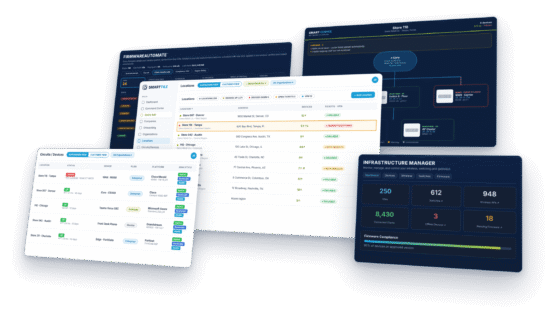
ACTA lives inside the Ticket Dashboard at /tickets in SmartTile, which replaced the older manual ticket list. From this single screen, NOC and L1 engineers can see:
- Ready for ACTA tickets that have every field Joey needs to start a call
- Needs Info tickets missing a required field, which blocks automation until it’s filled in
- ACTA Running tickets with a live call currently in progress
Each ticket also shows a 7-stage progress stepper (Created, Queued, On Call, Ticket Opened, Awaiting Carrier, Restored, Closed), a color-coded status pill, an attempt counter out of the maximum allowed tries, and, once the carrier responds, a confirmed carrier ticket number.
Starting a Call
Starting ACTA on a ticket triggers a real outbound phone call, so it’s meant for genuine outages, not testing. Before Joey can dial, a preflight check confirms every required field is present: circuit ID, carrier, site address, local contact, access hours, dispatch authorization, and power-cycle confirmation. Most of this is pre-filled from existing service data, and a Circuit Lookup tool helps fill in the rest.
Watching It Happen
Once a call starts, the dashboard updates live. Engineers can expand the stepper to see a timestamped call log: when the call started, how the IVR was navigated, when a live agent picked up, and what the outcome was. No refreshing, no guessing.
Staying in Control
Any running call can be stopped at any time with a documented reason, such as a customer-requested hold, a maintenance window, or escalation to a human. If Joey exhausts its retry attempts without success, the ticket is automatically escalated and flagged in a breach queue banner so nothing gets missed.
Why AI Voice Automation Makes Sense for Carrier Tickets
Carrier repair calls are repetitive by nature. The same information gets read back on nearly every call: circuit identifiers, addresses, contact names, and standard yes/no questions about dispatch and troubleshooting steps already completed. That repetition is exactly the kind of task well suited to a voice AI agent, freeing NOC engineers to focus on diagnosing issues and managing customer relationships instead of sitting in a phone queue.
Behind the scenes, ACTA runs on a few key mechanisms:
- Preflight gating, which blocks a call from starting until every required field is confirmed
- A retry cadence that spaces out follow-up attempts instead of repeatedly redialing
- An auto-update loop that keeps calling back after a ticket is opened to chase ETR and RFO status
- A learning loop, where call transcripts are analyzed to improve performance carrier by carrier over time
The Bottom Line
Carrier ticket automation isn’t about removing people from the process. It’s about removing the parts of the process that don’t need a person: hold music, IVR menus, and repeating the same site details on every call. ACTA handles that layer, while engineers stay fully in control, able to take over any ticket instantly and step in the moment automation hits its limit.
For teams managing connectivity across many locations, that shift adds up to real time back, faster ETRs, and fewer tickets falling through the cracks.
ACTA is part of the SmartTile platform. Learn more about how SmartChoice consolidates, standardizes, and scales connectivity management at smartchoiceus.com.